01
soothe
Making Tactile Wellness More Visible
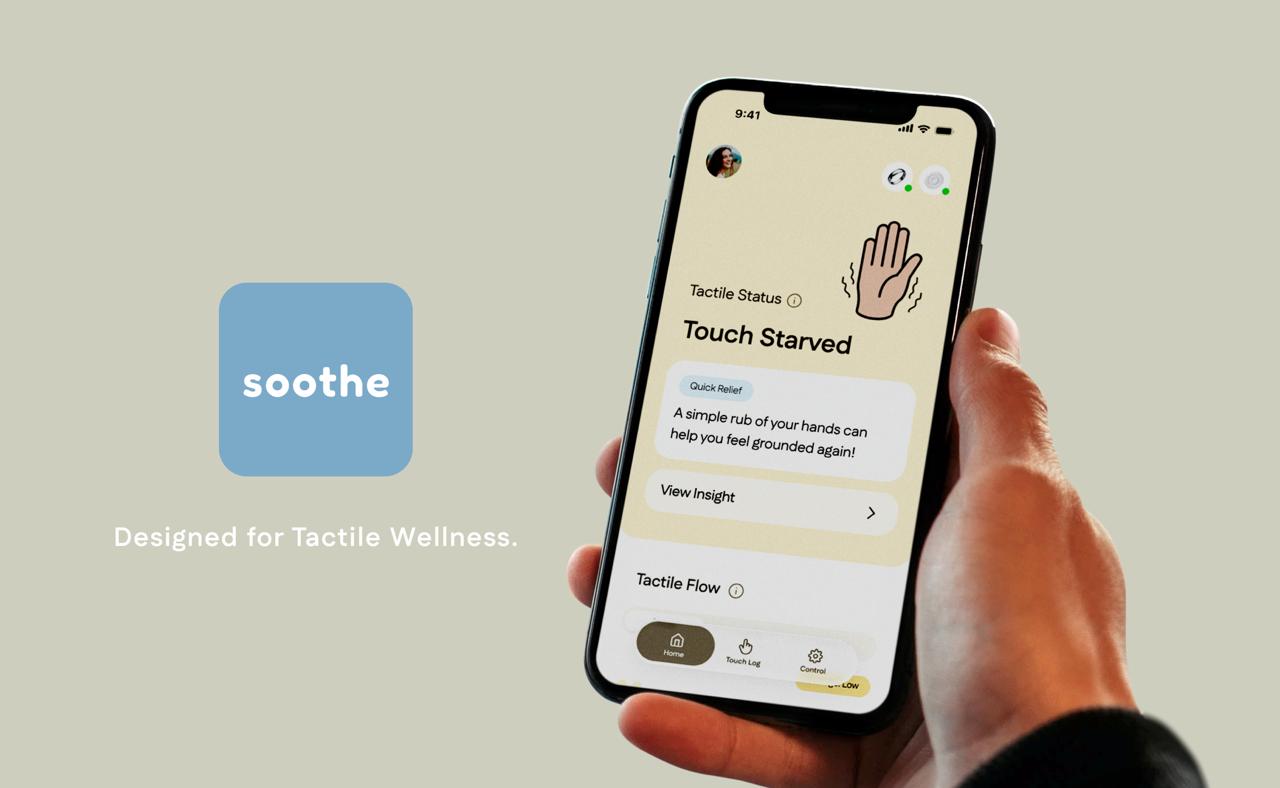
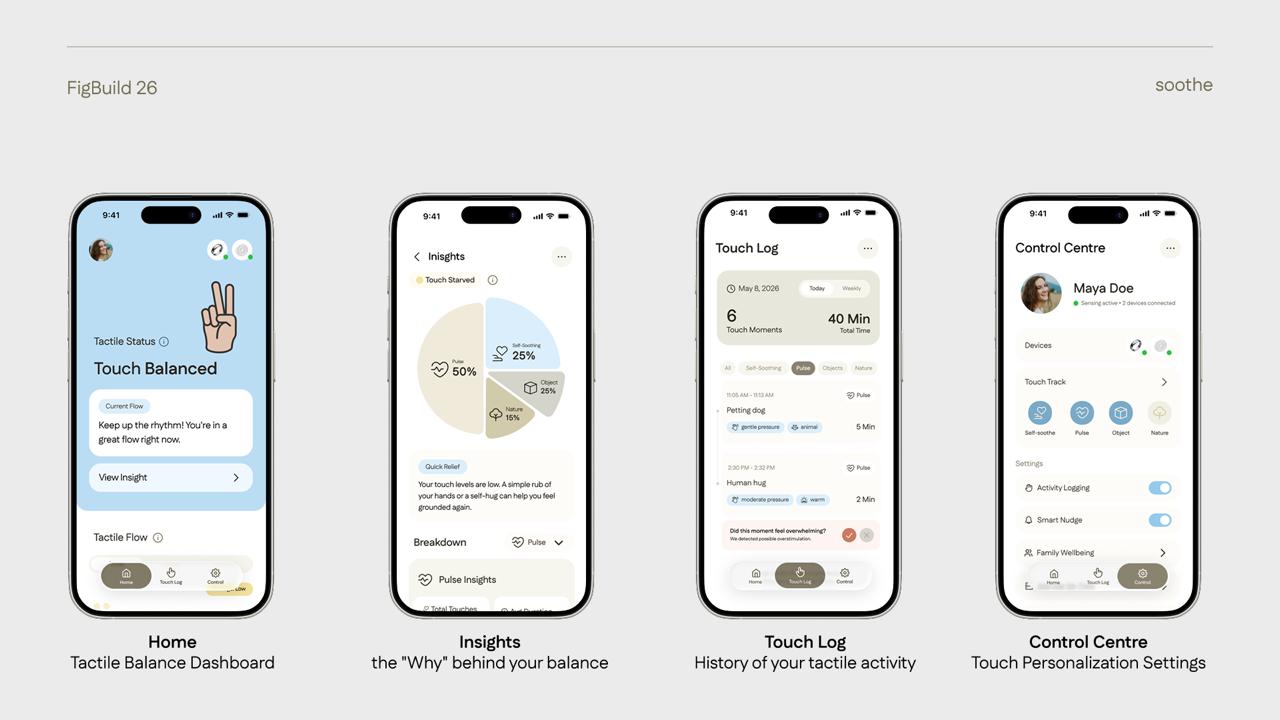
We track our steps, sleep, calories. But what about touch? ✋ At hashtag#FigBuild2026, the brief challenged us to track human sensory experiences beyond the five common senses. As we went down research rabbit holes , one thing stood out: touch is essential for emotional regulation and wellbeing, yet it’s something most wellness tools completely ignore. So in 72 hours, our team designed hashtag#Soothe — a privacy-first tactile wellness platform that helps people understand their sensory needs and stay emotionally grounded.
Team
Jane Esme Qian Gabriel
Skills:
Duration:
March 6 - 9, 2026
The Design Challenge.
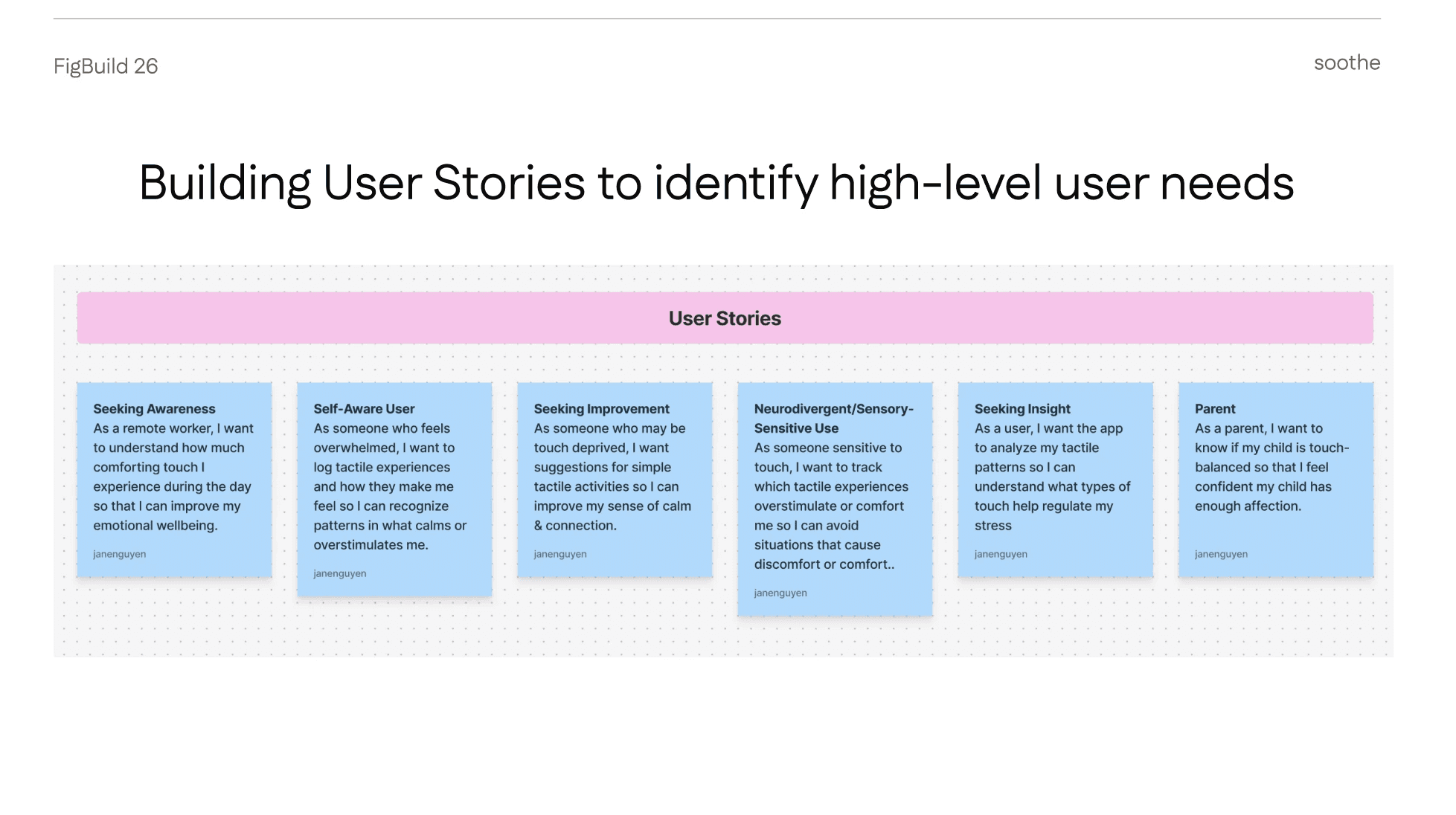
Although touch strongly influences emotional wellbeing, people rarely have insight into how their daily tactile environment affects their body.
Users may experience:
touch deprivation from isolation or remote work
sensory overload in crowded environments
difficulty understanding what kinds of touch help them feel calm
There are currently no tools that help people reflect on their tactile wellbeing.
How might we help people understand the emotional weight of touch and support healthier tactile experiences?
What Is Touch Balance & Who Does It Affect?
We explored research around:
tactile sensory processing
emotional regulation
CT-afferent touch receptors
HRV and physiological stress signals
We also examined populations who may be most affected by tactile imbalance, including:
remote workers
caregivers and children
neurodivergent individuals
a glimpse into our affinity mapping! (click to view more)
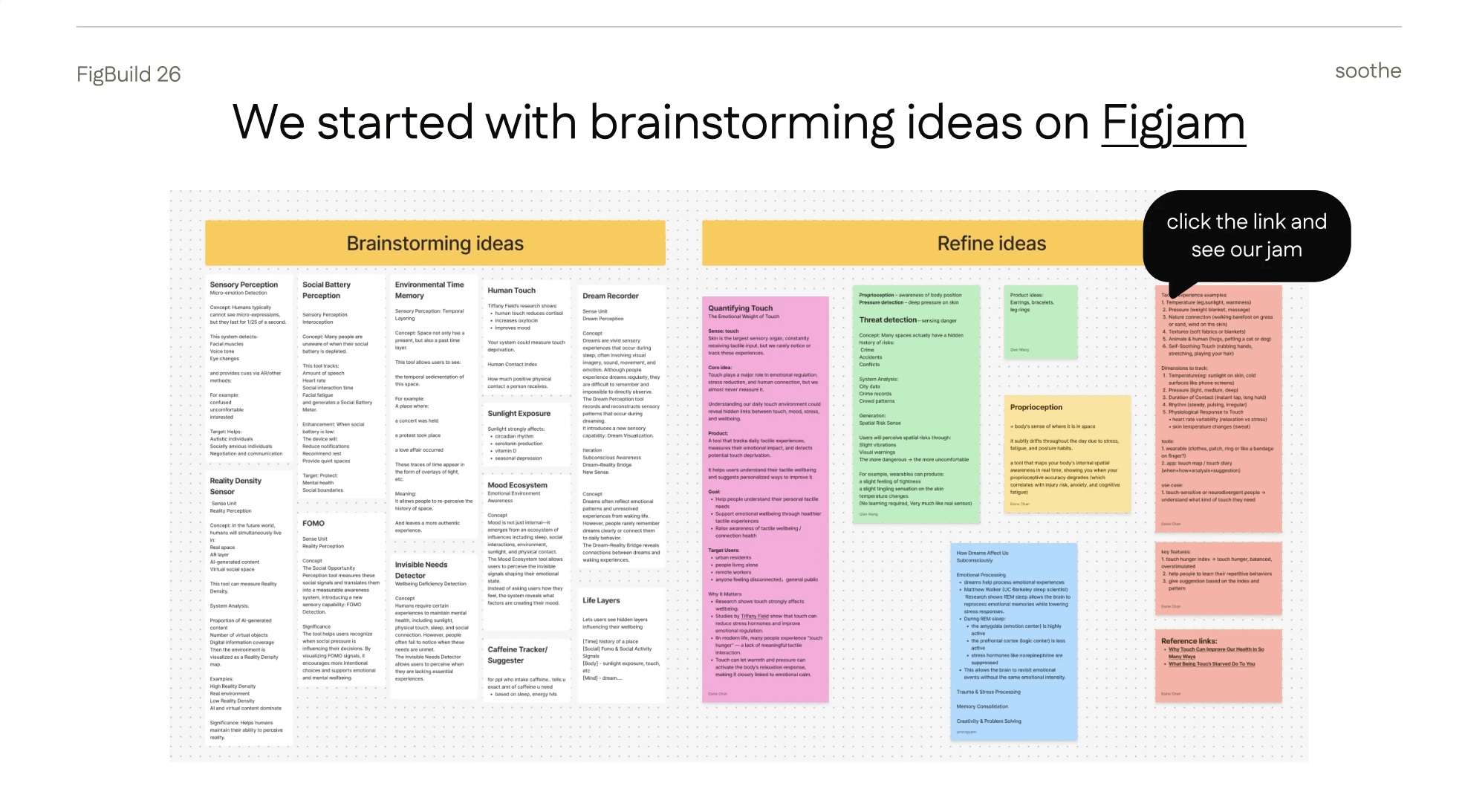
Steps To Creating New Sensory Experiences.
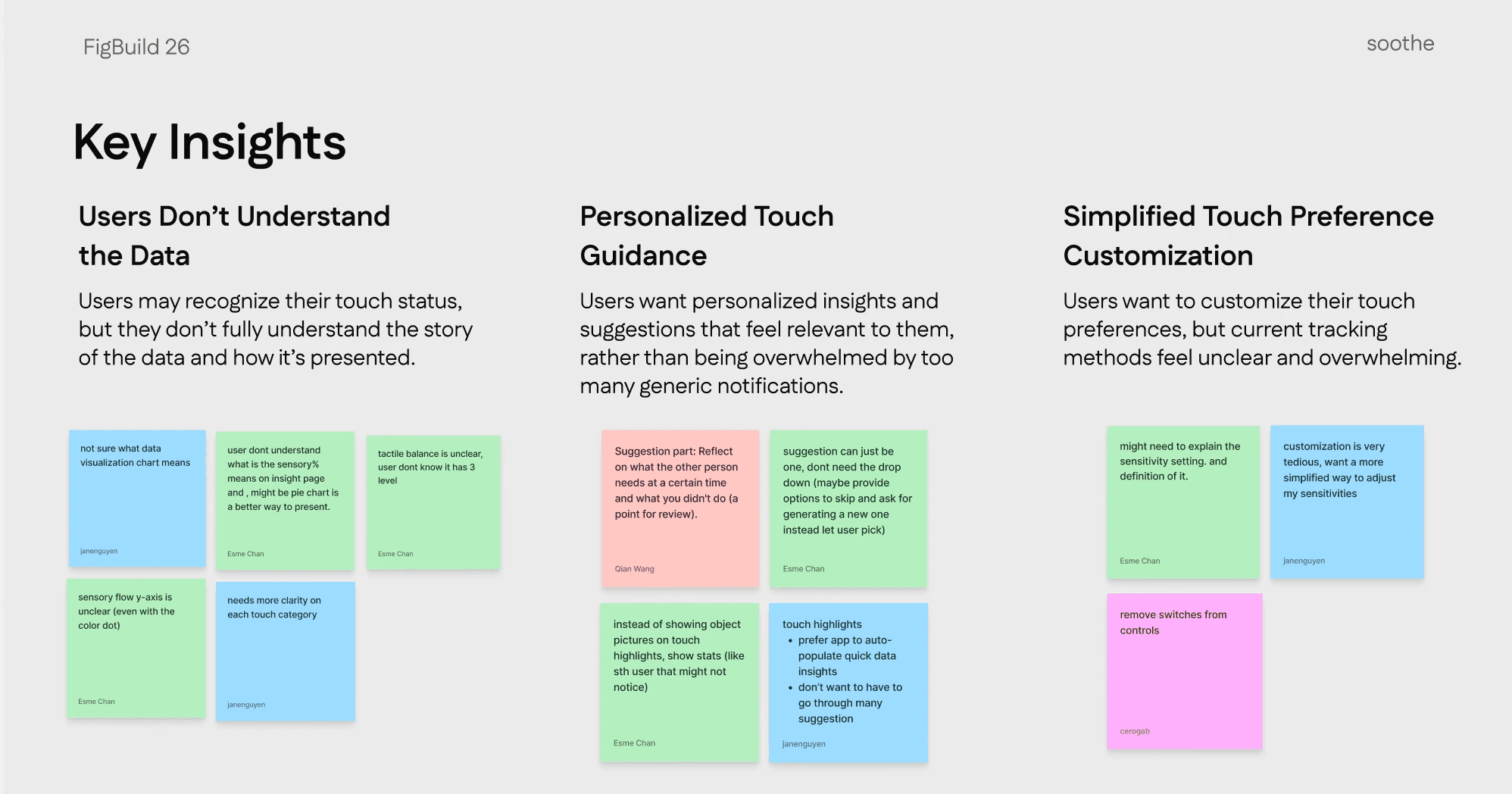
To explore how people understand tactile wellbeing, we conducted usability testing with six participants using our mobile prototype. Participants were asked to navigate key flows, customize touch preferences, and interpret their Tactile Balance Status.
What we gathered:
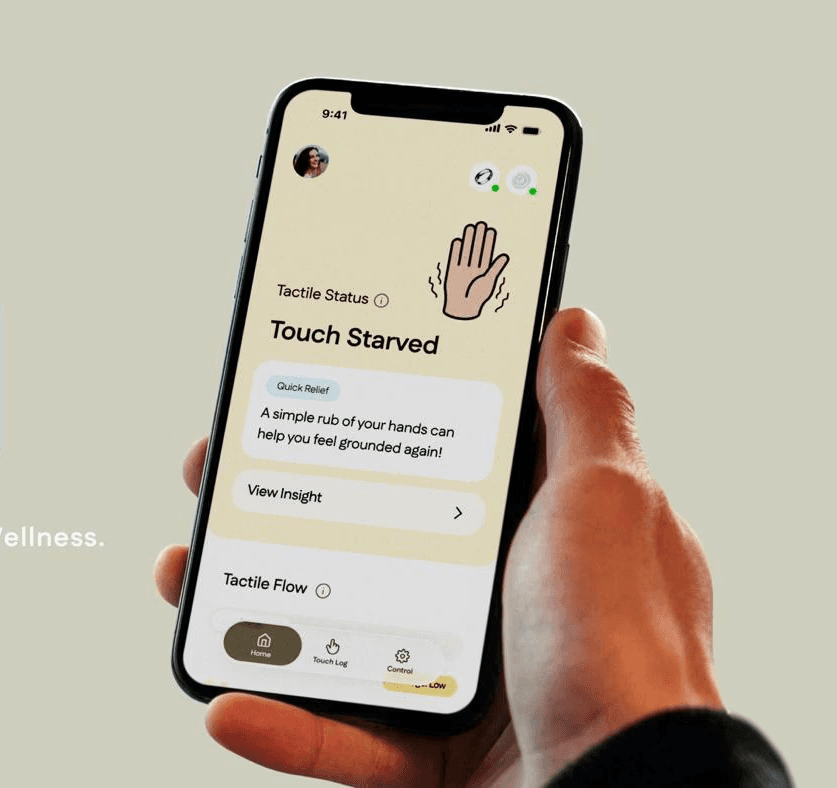
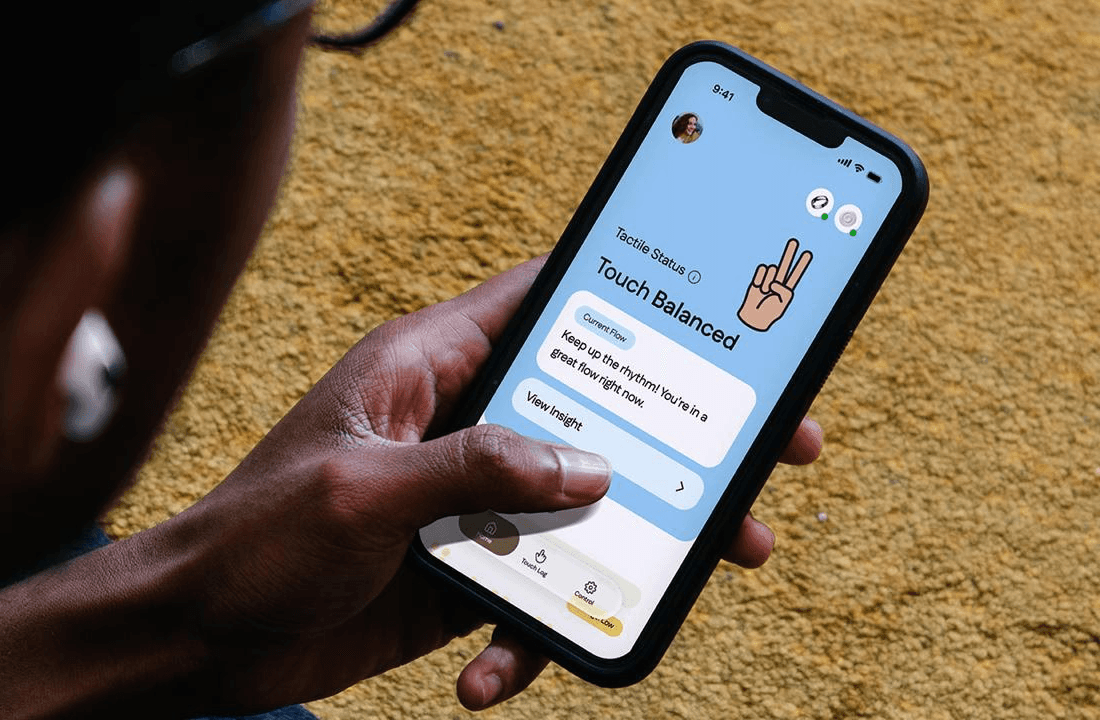
Users needed clearer explanations of tactile status.
Participants understood the concept of touch balance more easily when supported by color indicators and information pop-ups.
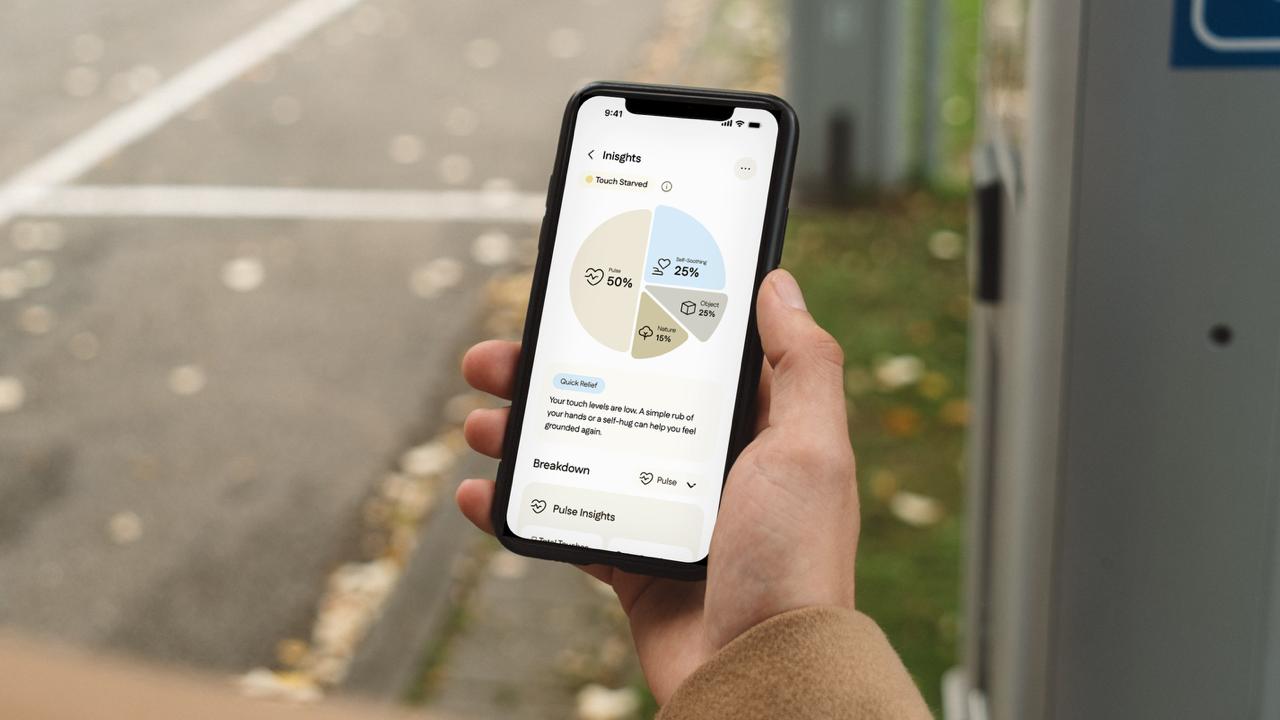
Touch insights should feel personalized.
Users preferred meaningful, tailored suggestions rather than frequent or generic notifications.
Customization needed to feel simpler and less overwhelming.
Participants wanted an easier way to adjust touch sensitivity preferences so the system could better reflect their personal comfort levels.
These insights helped guide refinements to the Tactile Status interface, personalization settings, and insight delivery, making the experience clearer and more intuitive.
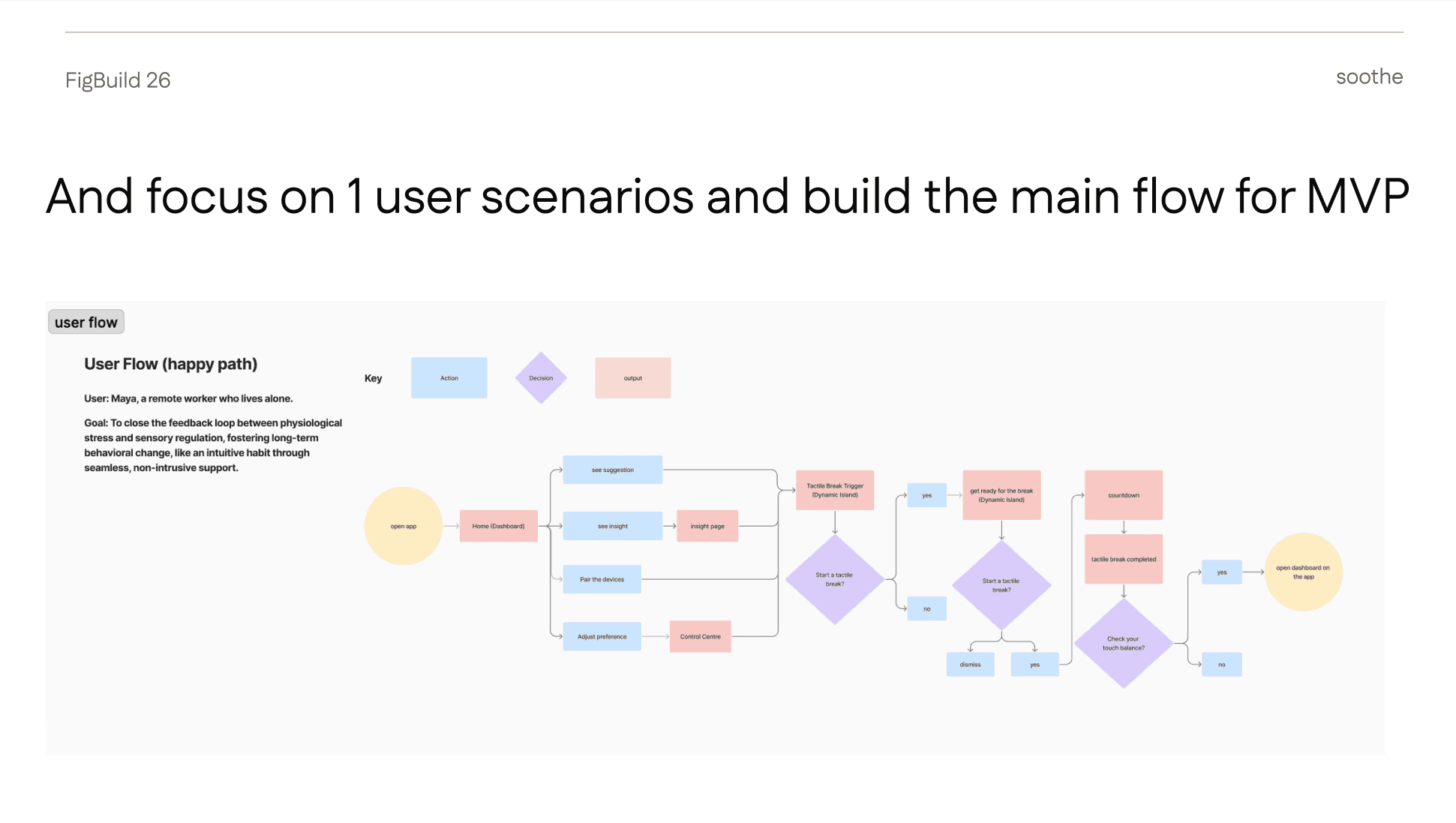
A Glimpse Into Tracking Tactile Wellness
What I Learned.
Designing Soothe challenged me to think about how UX can make invisible experiences more understandable. Touch is something we experience constantly, yet we rarely reflect on how it affects our emotional state.
Through research, prototyping, and user testing, I learned how important it is to translate complex physiological signals into simple, meaningful insights that users can easily interpret.